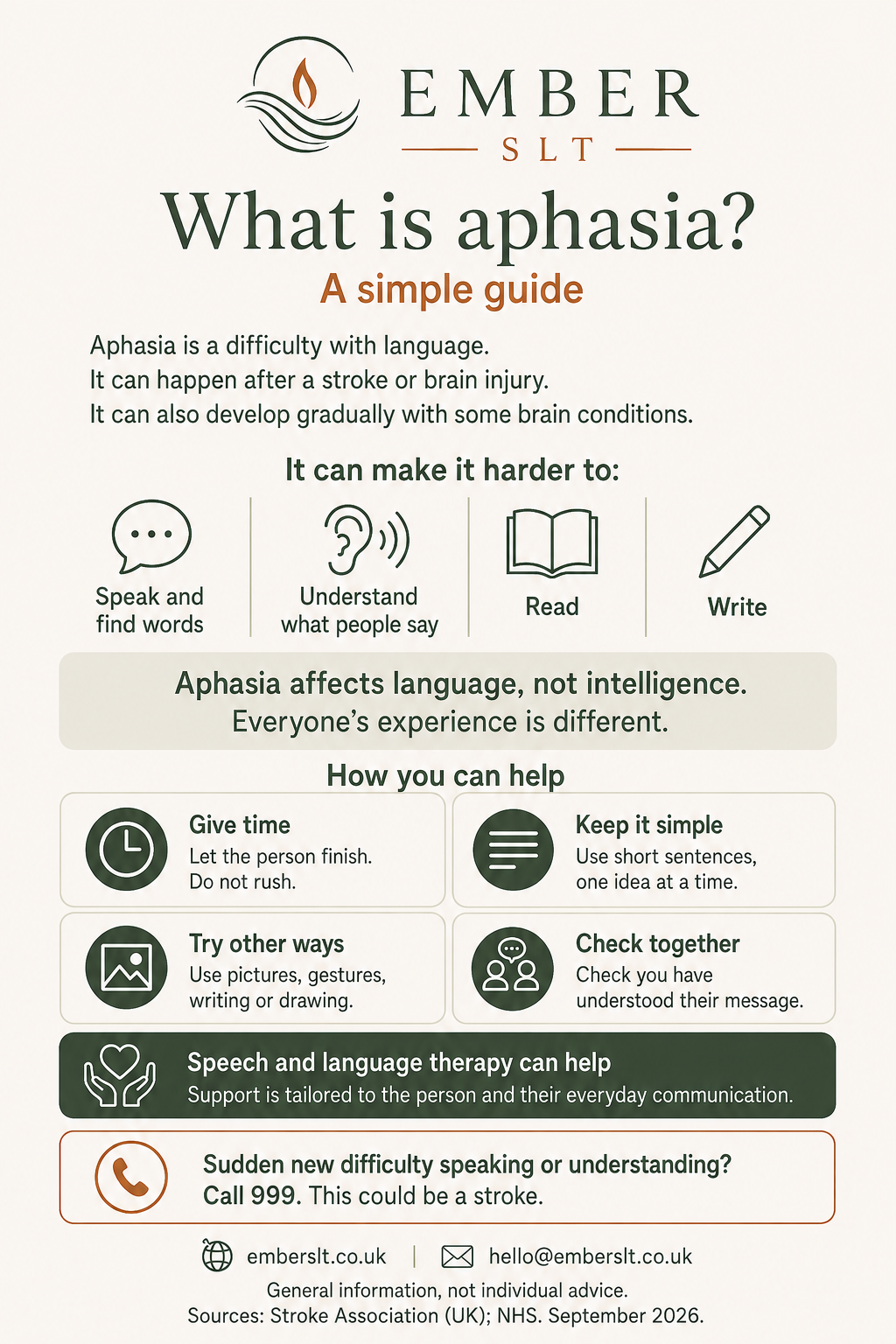
What is aphasia?
An introduction to changes in language after a stroke or brain injury.
PNG image · 1.5 MBPrivate adult neurological therapy
Home visits Online appointments

Resources
Simple information and practical tips for adults, families and carers. Free to read, download and share.
Choose a guide to open it at full size, or download a copy to keep.
An introduction to changes in language after a stroke or brain injury.
PNG image · 1.5 MB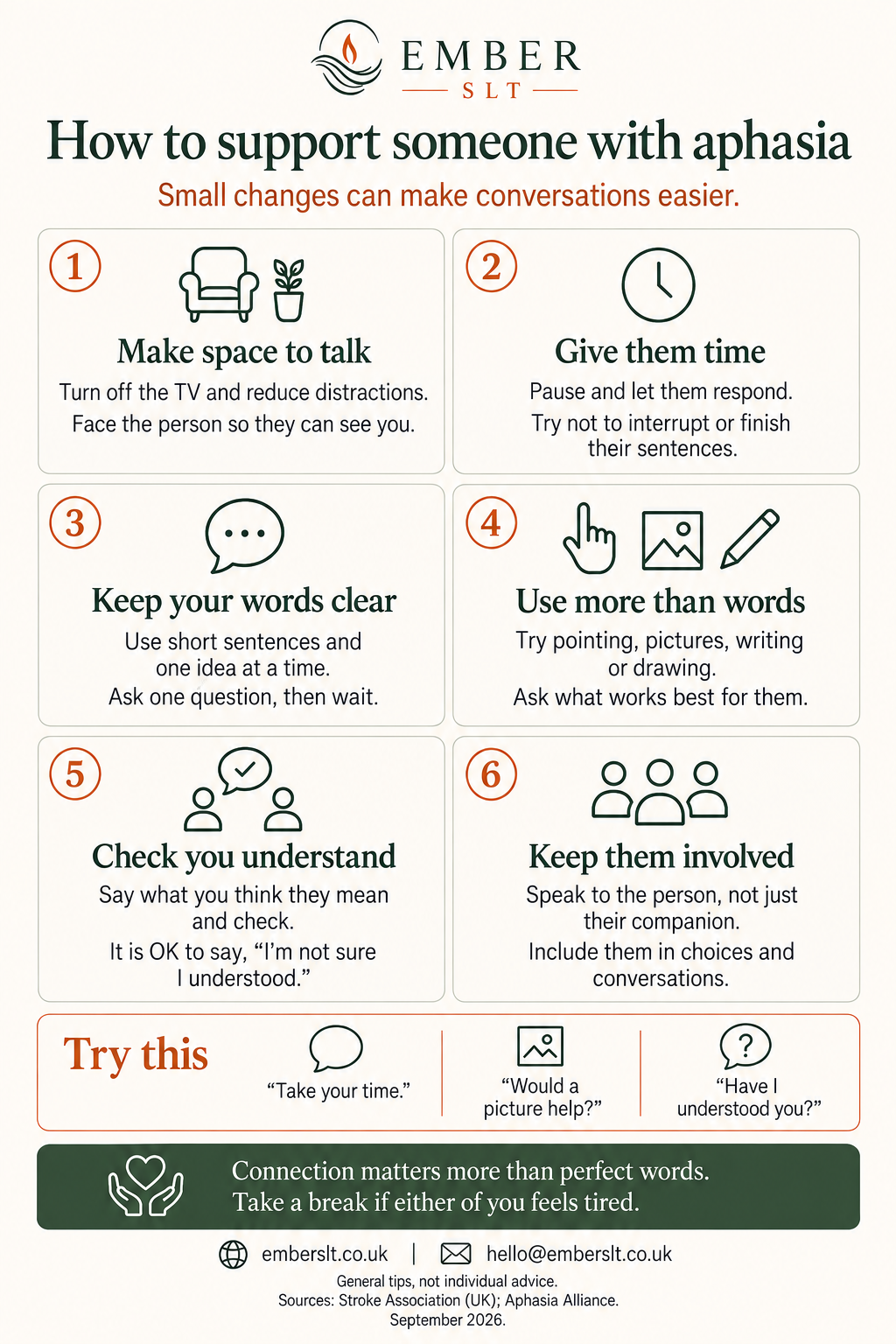
Simple ways to make everyday conversations easier.
PNG image · 1.4 MB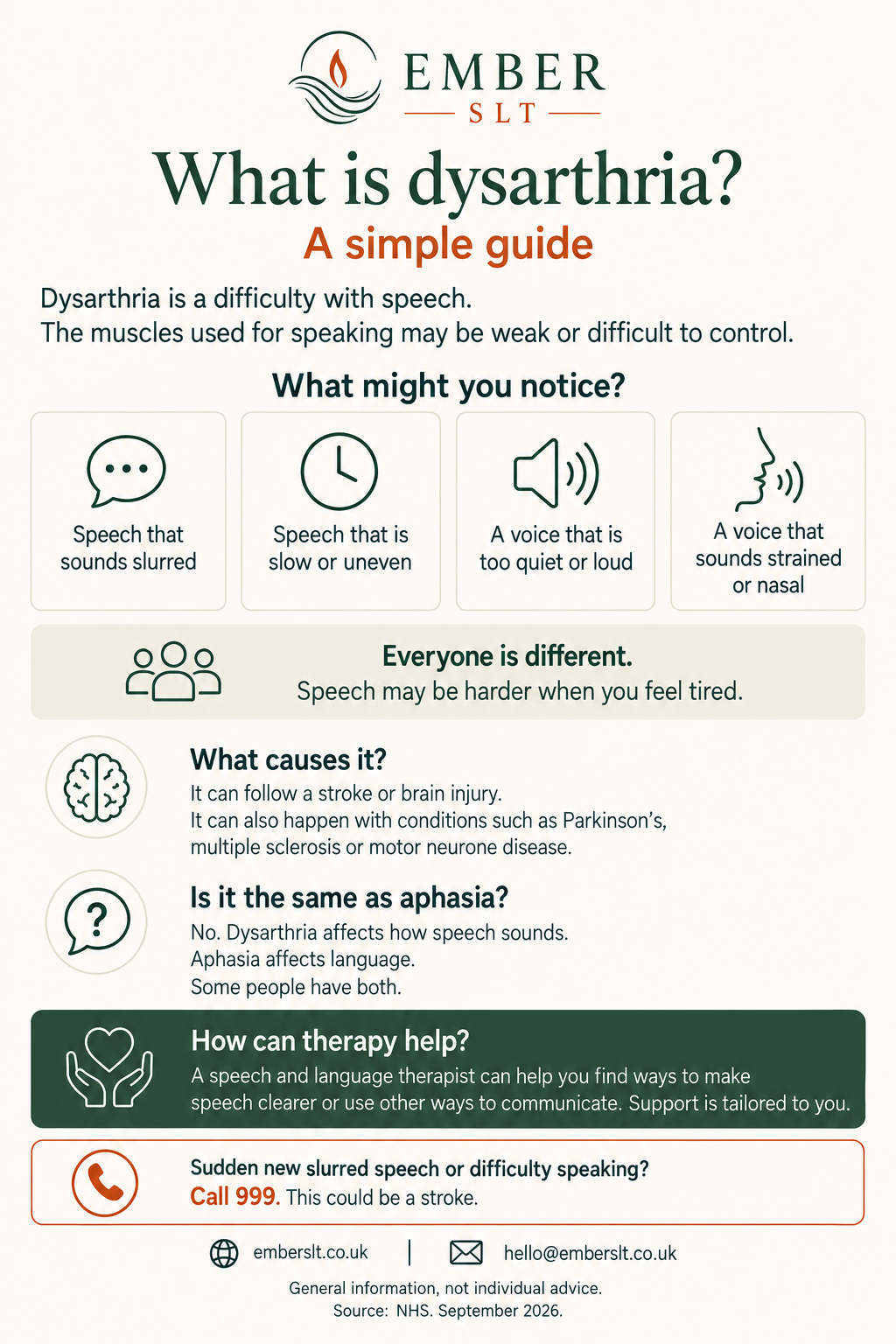
Understanding changes in how speech sounds.
PNG image · 1.4 MB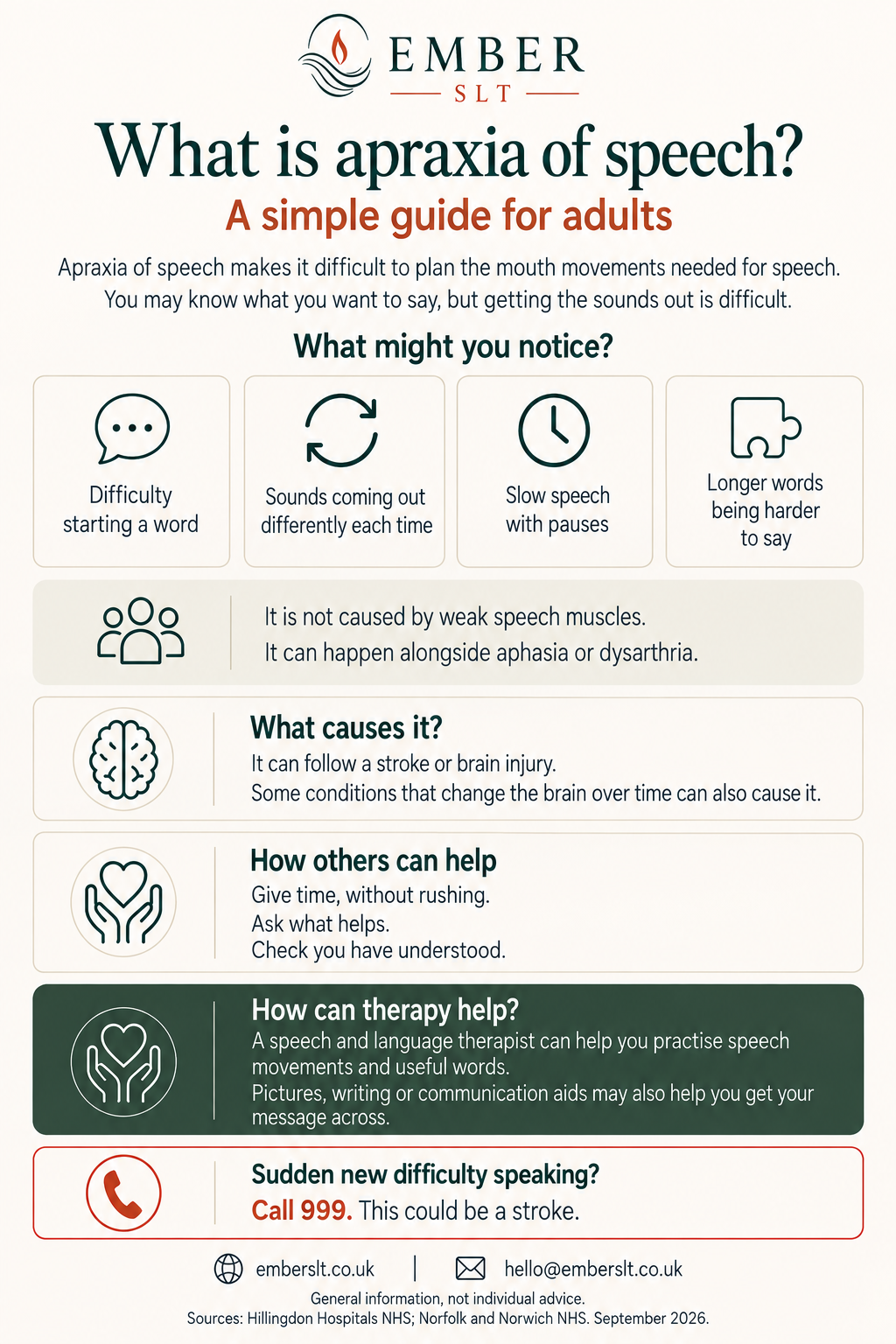
A simple explanation of difficulties planning speech movements.
PNG image · 1.4 MB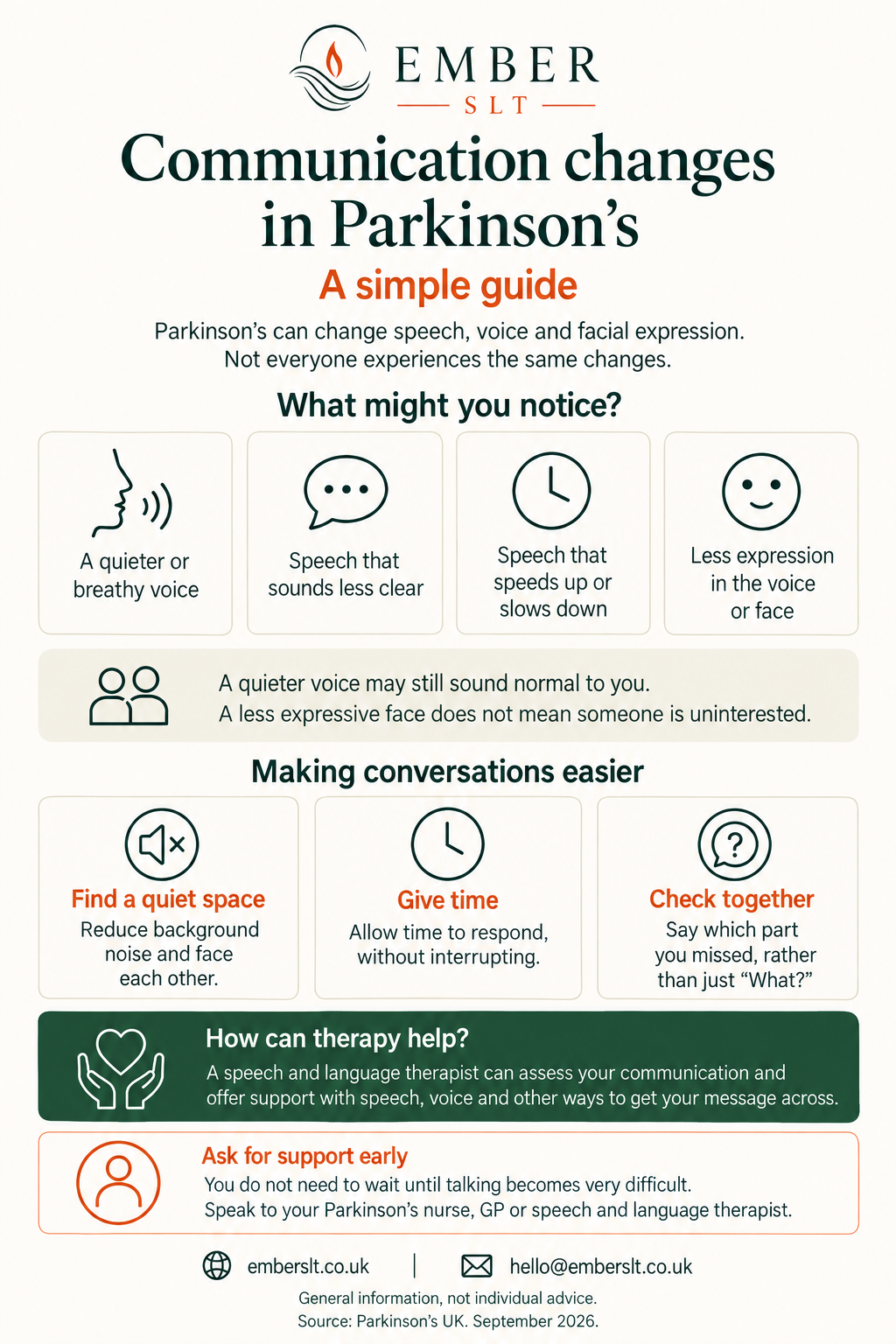
An introduction to speech and communication changes.
PNG image · 1.4 MB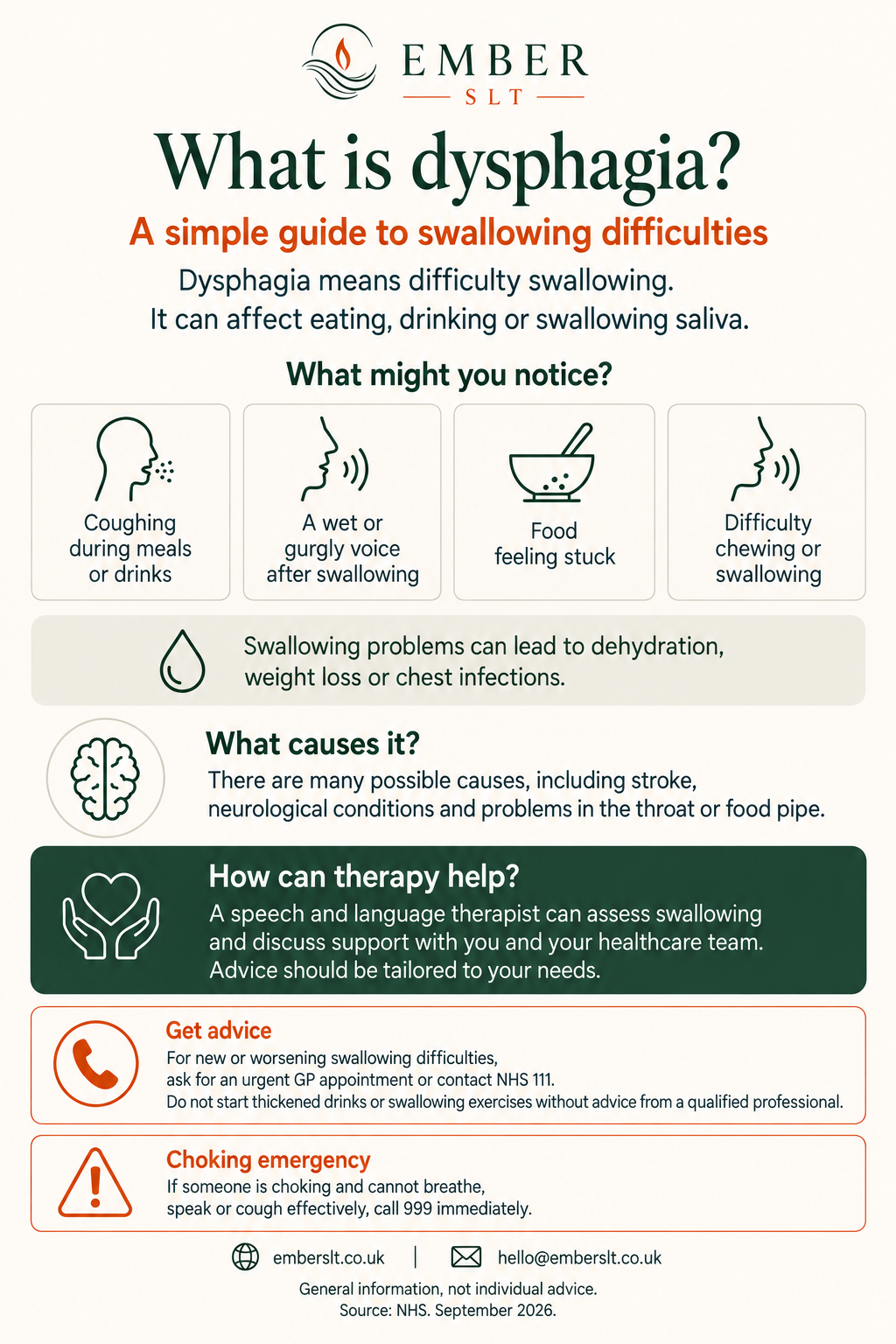
Understanding swallowing difficulties and when to seek support.
PNG image · 1.5 MB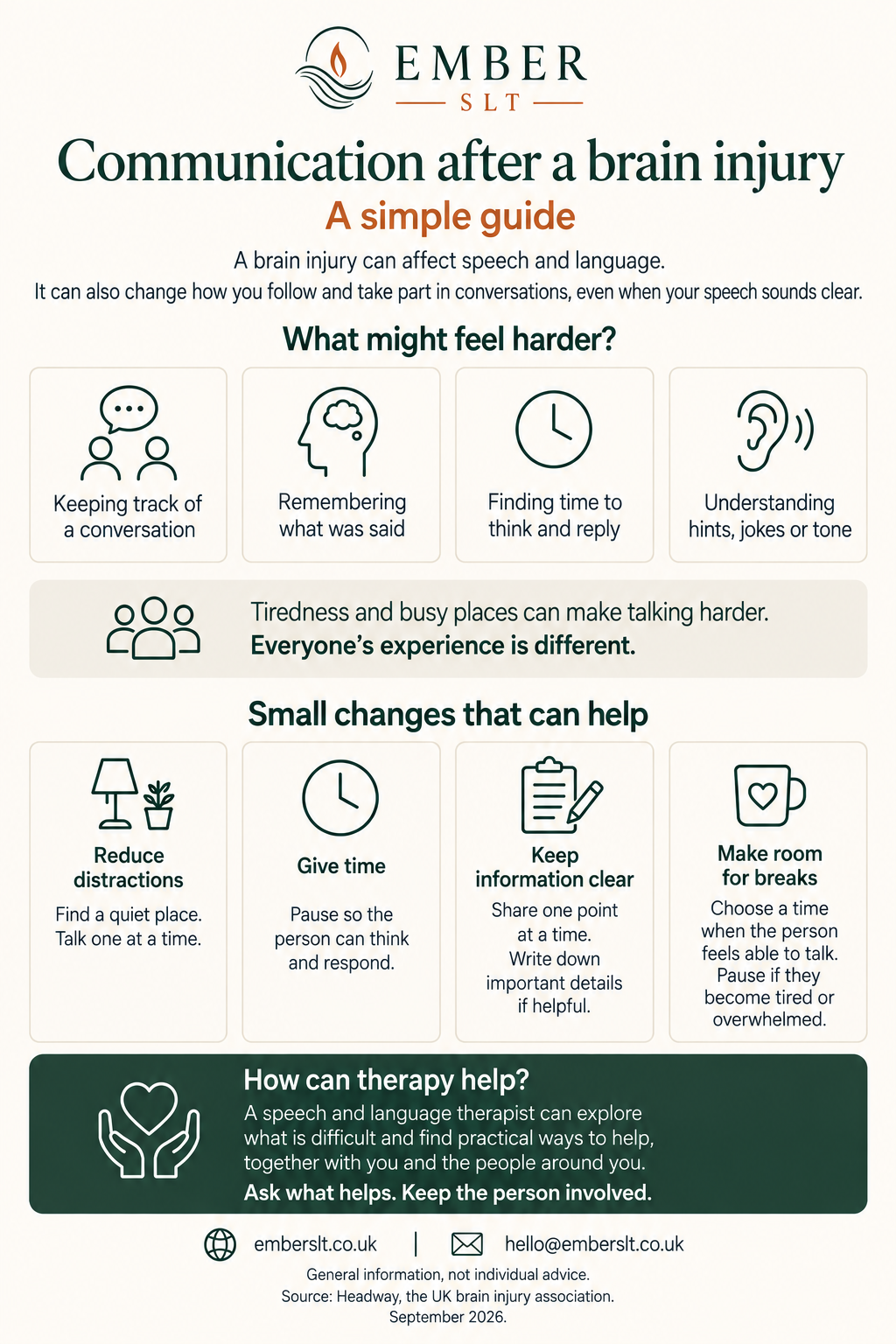
Understanding how a brain injury can affect communication.
PNG image · 1.4 MB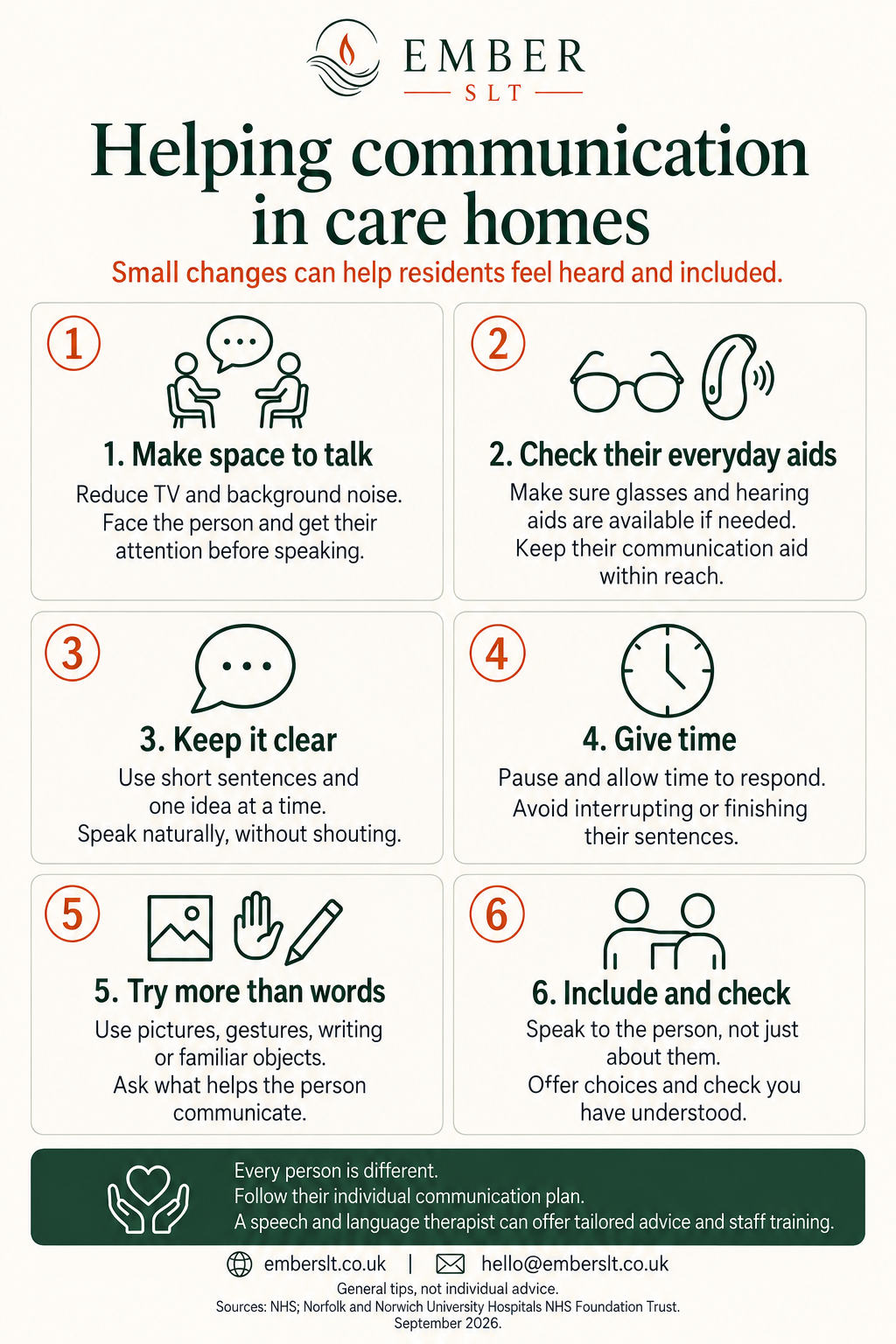
Practical tips to help residents feel heard and included.
PNG image · 1.5 MBTrusted organisations offering further information and support for you and the people around you.
These links open an external website in a new tab.
Information and support about stroke and aphasia.
Information and support after a brain injury.
Information and support for people affected by Parkinson’s.
Information and support for people affected by motor neurone disease.
Information and support about multiple sclerosis.
Information and support for people affected by dementia.
Information and support about Functional Neurological Disorder (FND).
Information and support for people affected by ataxia.
Information and support for people affected by Huntington’s disease, their families and carers.
These guides provide general information and do not replace individual advice. If you would like support with your own situation, please get in touch.
Start a conversation
A free 15-minute enquiry call is a chance to ask questions, with no pressure to book.
Enquire about a free callhello@emberslt.co.uk · I aim to respond within two working days.