A simple guide
Communication changes in Parkinson’s
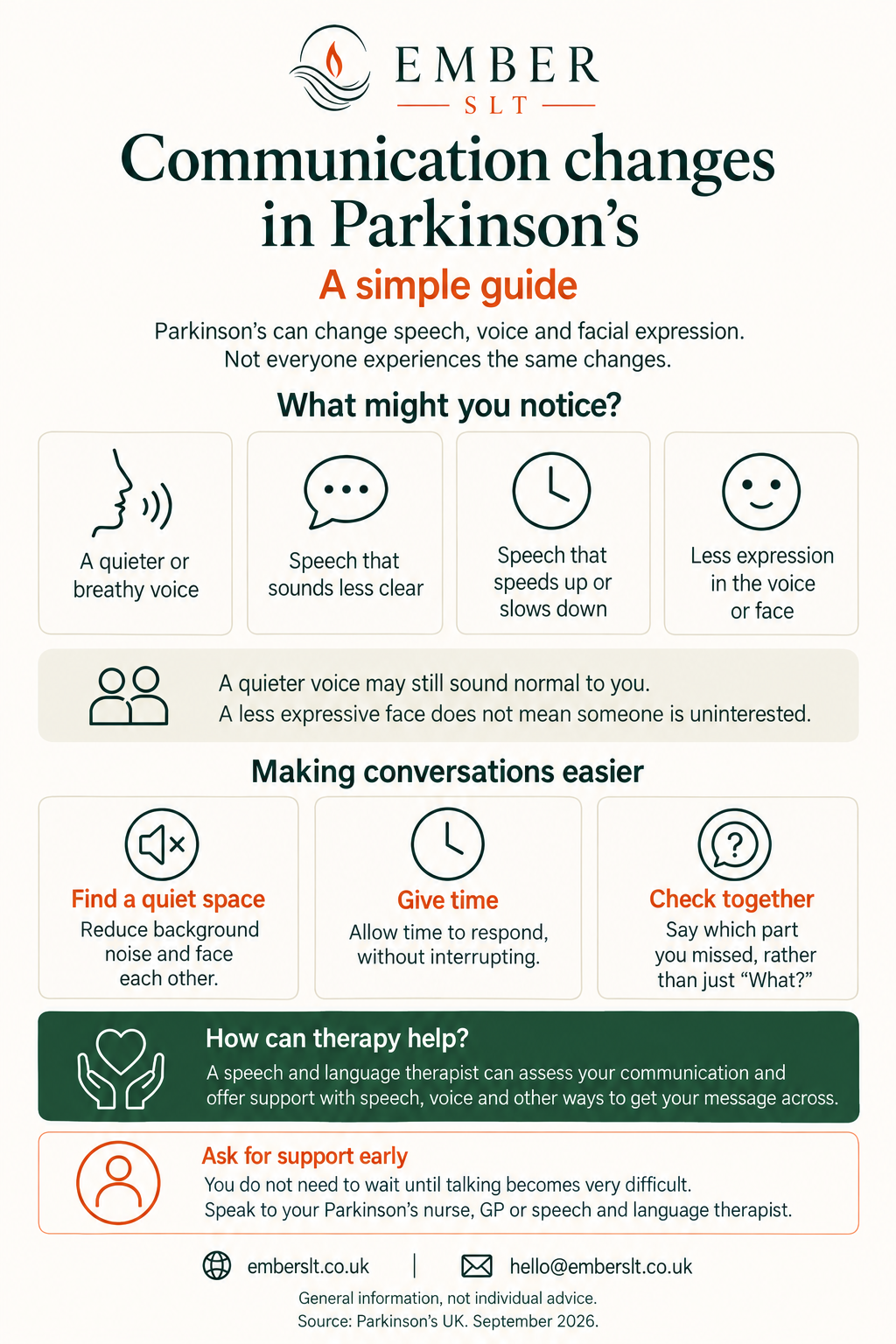
Parkinson’s can change speech, voice and facial expression. Not everyone experiences the same changes.
What might you notice?
- A quieter or breathy voice
- Speech that sounds less clear
- Speech that speeds up or slows down
- Less expression in the voice or face
Understanding these changes
A quieter voice may still sound normal to you. A less expressive face does not mean someone is uninterested.
Making conversations easier
- Find a quiet space: Reduce background noise and face each other.
- Give time: Allow time to respond, without interrupting.
- Check together: Say which part you missed, rather than just “What?”
How can therapy help?
A speech and language therapist can assess your communication and offer support with speech, voice and other ways to get your message across.
Ask for support early
You do not need to wait until talking becomes very difficult. Speak to your Parkinson’s nurse, GP or speech and language therapist.
General information, not individual advice. Sources credited in the original Ember guide: Parkinson’s UK. September 2026.
View the original illustrated guide · Download the original guide