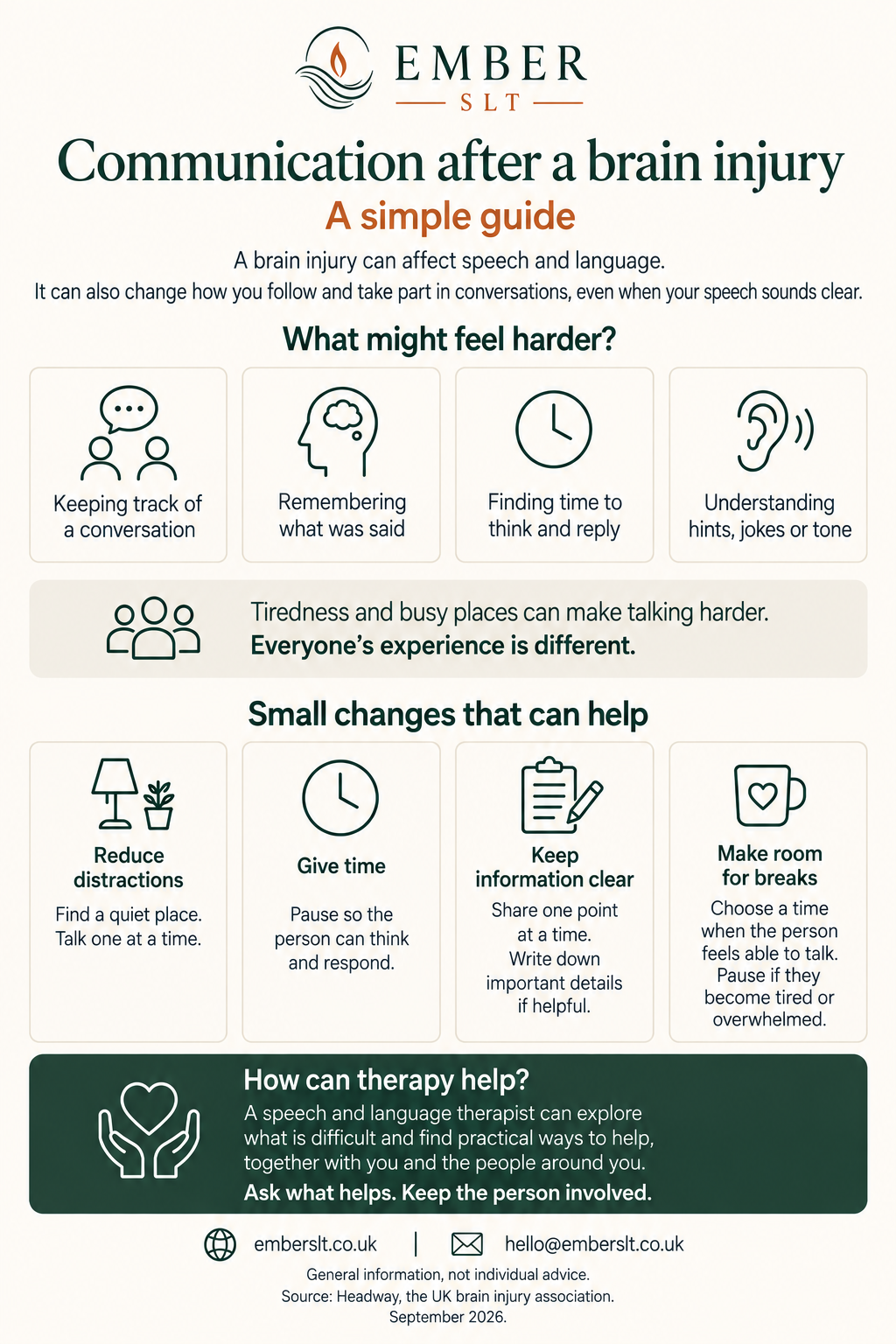
A simple guide
Communication after a brain injury
A brain injury can affect speech and language. It can also change how you follow and take part in conversations, even when your speech sounds clear.
What might feel harder?
- Keeping track of a conversation
- Remembering what was said
- Finding time to think and reply
- Understanding hints, jokes or tone
Everyone’s experience is different
Tiredness and busy places can make talking harder.
Small changes that can help
- Reduce distractions: Find a quiet place. Talk one at a time.
- Give time: Pause so the person can think and respond.
- Keep information clear: Share one point at a time. Write down important details if helpful.
- Make room for breaks: Choose a time when the person feels able to talk. Pause if they become tired or overwhelmed.
How can therapy help?
A speech and language therapist can explore what is difficult and find practical ways to help, together with you and the people around you. Ask what helps. Keep the person involved.
General information, not individual advice. Sources credited in the original Ember guide: Headway, the UK brain injury association. September 2026.
View the original illustrated guide · Download the original guide