A simple guide
What is apraxia of speech?
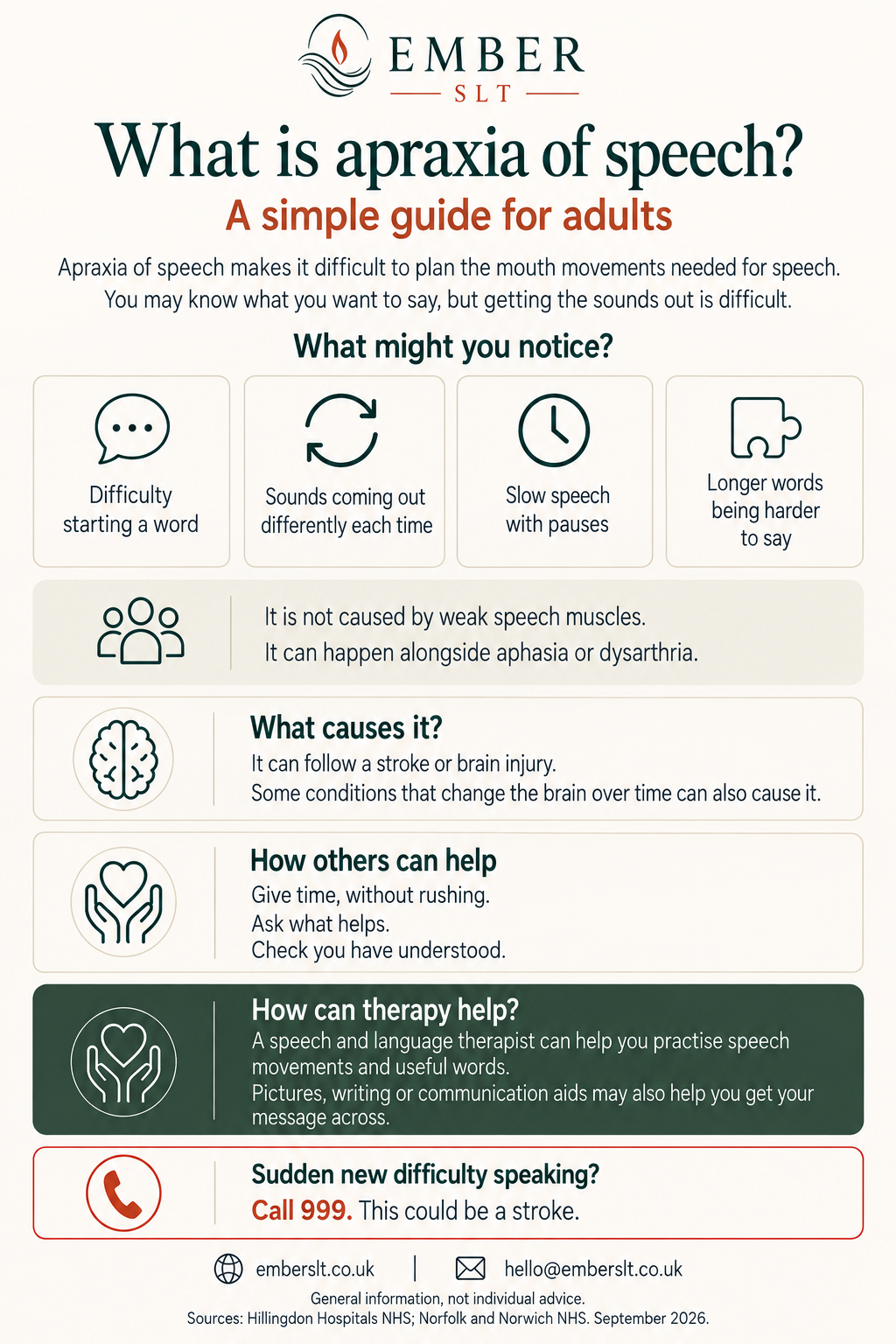
Apraxia of speech makes it difficult to plan the mouth movements needed for speech. You may know what you want to say, but getting the sounds out is difficult.
What might you notice?
- Difficulty starting a word
- Sounds coming out differently each time
- Slow speech with pauses
- Longer words being harder to say
Understanding apraxia of speech
It is not caused by weak speech muscles. It can happen alongside aphasia or dysarthria.
What causes it?
It can follow a stroke or brain injury. Some conditions that change the brain over time can also cause it.
How others can help
- Give time, without rushing.
- Ask what helps.
- Check you have understood.
How can therapy help?
A speech and language therapist can help you practise speech movements and useful words. Pictures, writing or communication aids may also help you get your message across.
Sudden new difficulty speaking?
Call 999. This could be a stroke.
General information, not individual advice. Sources credited in the original Ember guide: Hillingdon Hospitals NHS; Norfolk and Norwich NHS. September 2026.
View the original illustrated guide · Download the original guide