A simple guide
How to support someone with aphasia
Small changes can make conversations easier.
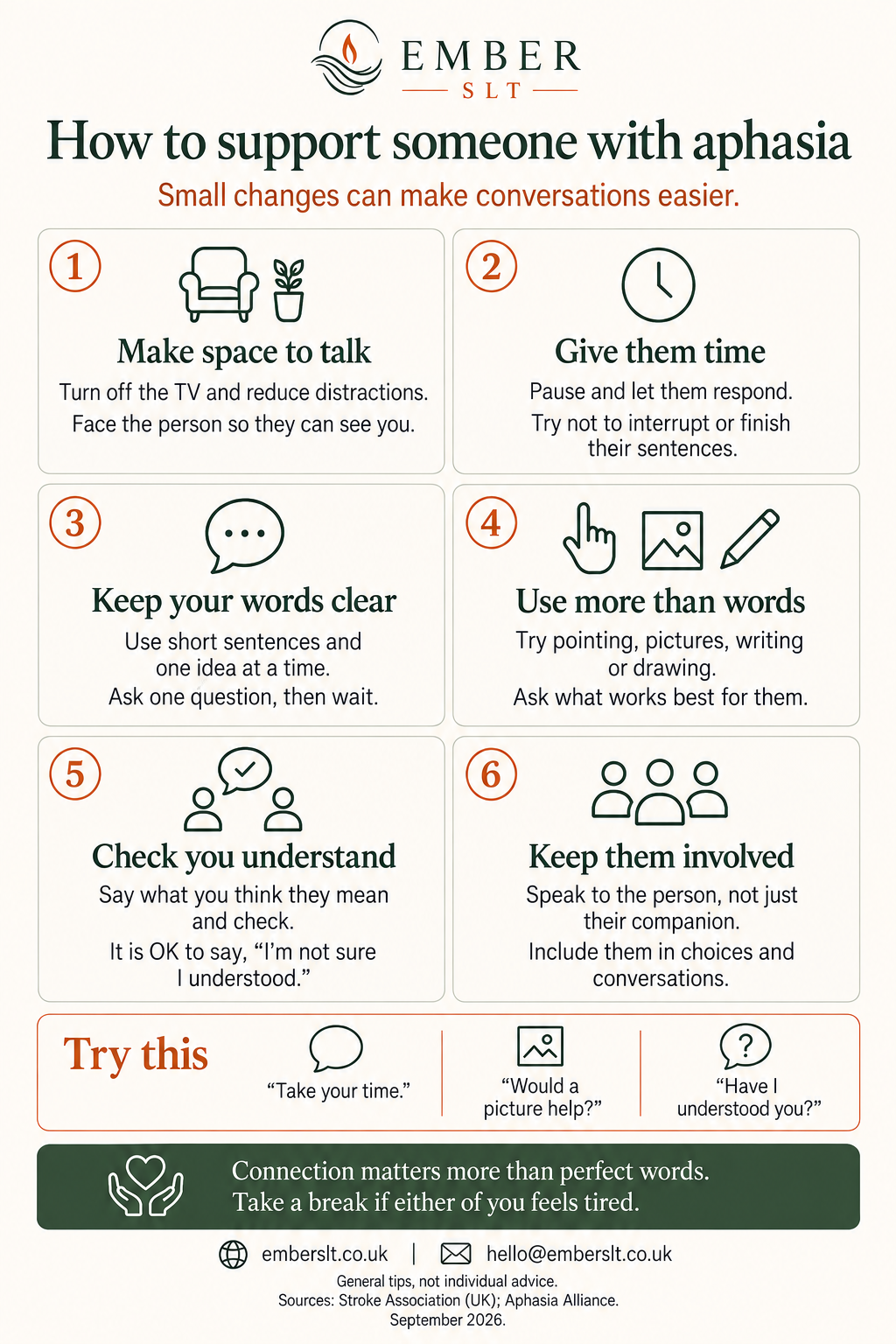
Make space to talk
Turn off the TV and reduce distractions. Face the person so they can see you.
Give them time
Pause and let them respond. Try not to interrupt or finish their sentences.
Keep your words clear
Use short sentences and one idea at a time. Ask one question, then wait.
Use more than words
Try pointing, pictures, writing or drawing. Ask what works best for them.
Check you understand
Say what you think they mean and check. It is OK to say, “I’m not sure I understood.”
Keep them involved
Speak to the person, not just their companion. Include them in choices and conversations.
Try this
- “Take your time.”
- “Would a picture help?”
- “Have I understood you?”
Connection matters more than perfect words
Take a break if either of you feels tired.
General information, not individual advice. Sources credited in the original Ember guide: Stroke Association (UK); Aphasia Alliance. September 2026.
View the original illustrated guide · Download the original guide