A simple guide
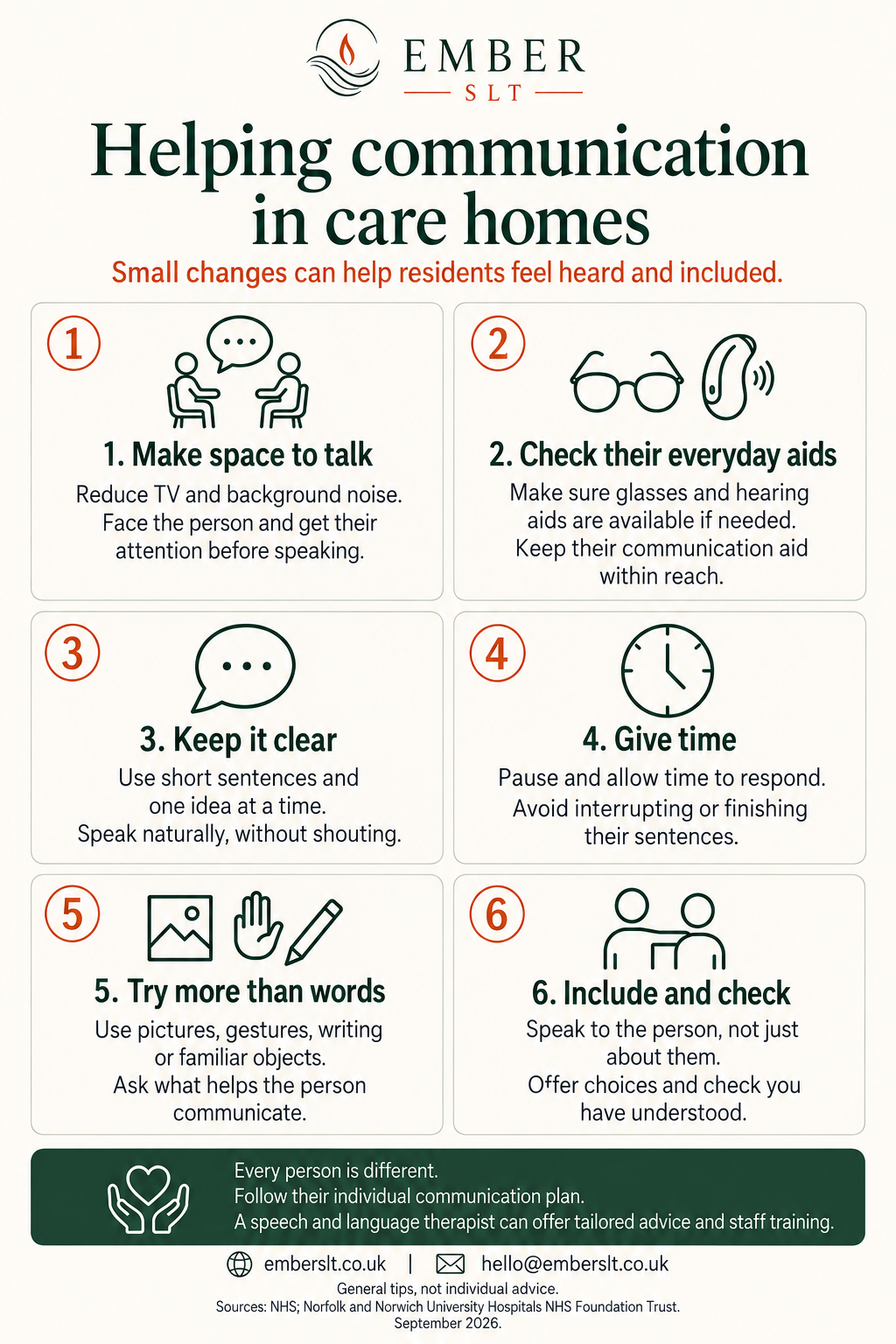
Helping communication in care homes
Small changes can help residents feel heard and included.
Make space to talk
Reduce TV and background noise. Face the person and get their attention before speaking.
Check their everyday aids
Make sure glasses and hearing aids are available if needed. Keep their communication aid within reach.
Keep it clear
Use short sentences and one idea at a time. Speak naturally, without shouting.
Give time
Pause and allow time to respond. Avoid interrupting or finishing their sentences.
Try more than words
Use pictures, gestures, writing or familiar objects. Ask what helps the person communicate.
Include and check
Speak to the person, not just about them. Offer choices and check you have understood.
Every person is different
Follow their individual communication plan. A speech and language therapist can offer tailored advice and staff training.
General information, not individual advice. Sources credited in the original Ember guide: NHS; Norfolk and Norwich University Hospitals NHS Foundation Trust. September 2026.
View the original illustrated guide · Download the original guide